
Vineyard Block Preparation: Sequence the Work Before Planting
09 September 2026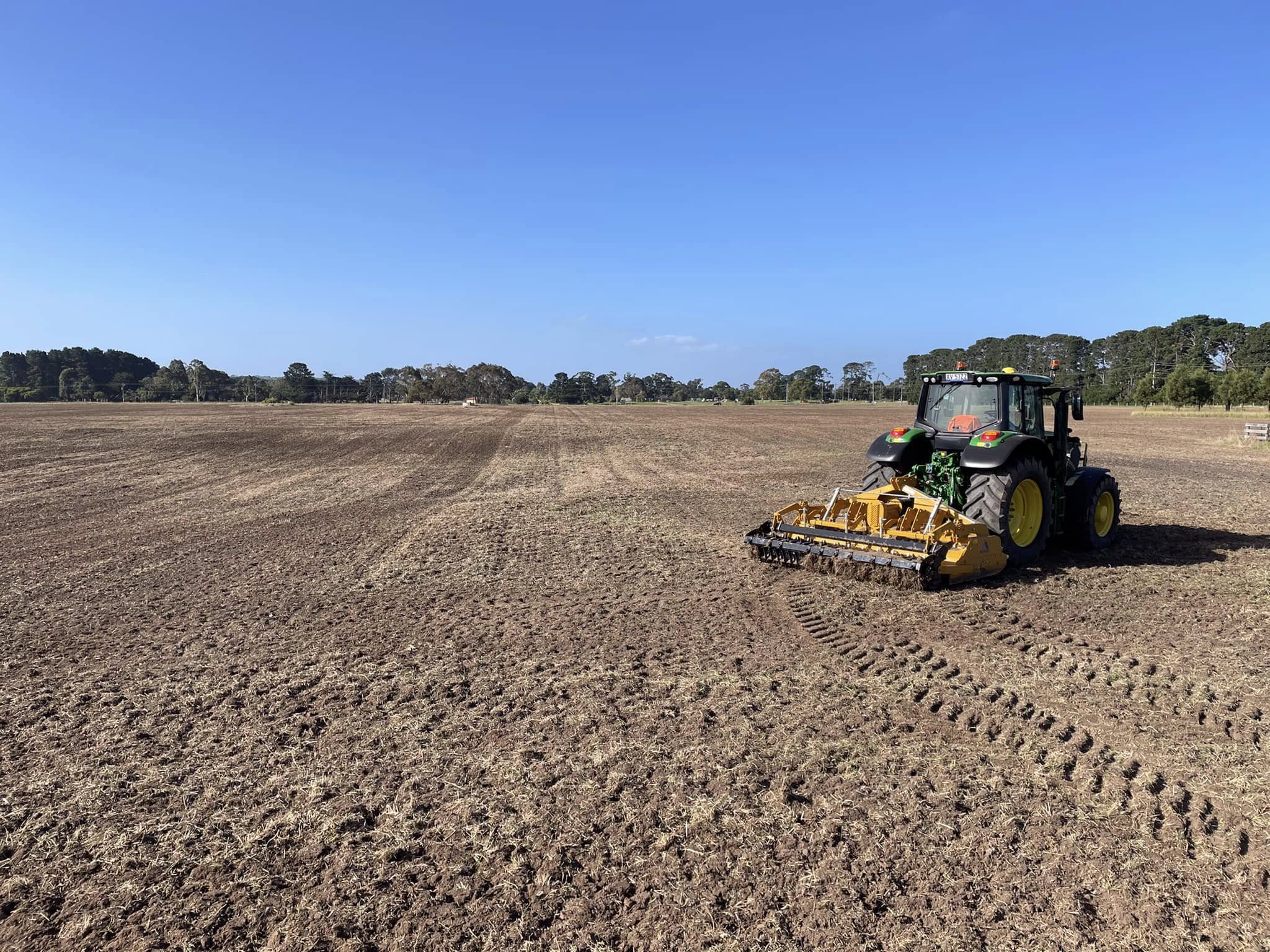
Plan vineyard block preparation on the Mornington Peninsula by sequencing cultivation, soil inputs, access and machinery around the planting programme.
Vineyard block preparation should sequence soil assessment, cultivation, inputs, access and planting rather than treating one machinery pass as a cure for every constraint. Malkin Group provides agricultural contracting on the Mornington Peninsula and surrounding regions. We scope machinery work around the block, timing and advice supplied by the grower and their agronomist.
This topic replaces another deep-ripping article because our archive already covers that service twice. Our broader agricultural contracting services include cultivation, seeding, spraying, fertilising and hay work, allowing a preparation enquiry to begin with the whole programme rather than a predetermined treatment.
Start With the Constraint the Work Must Address
Ponding, uneven growth or hard ground may have several causes. Soil texture, compaction, drainage, traffic and chemical limitations require different responses. Before booking cultivation, identify the target depth, area and intended outcome. Deep ripping is relevant only when a restrictive layer is confirmed, and conditions suit loosening.
Our existing guide to deep ripping and soil response explains that soil type, moisture, tine spacing and working depth matter. This article does not duplicate that guidance; it places any ripping decision within the wider pre-plant sequence.
What Should the Preparation Brief Include?
A useful enquiry should show what must happen before the planting date:
- Block map: Mark hectares, boundaries, slopes, headlands, wet areas, services and exclusion zones.
- Soil information: Provide test results, pits, agronomic findings and any known compaction layer.
- Existing cover: Describe pasture, crop residue, weeds and the current surface condition.
- Proposed rows: Show orientation, spacing and access needed by planting and future vineyard machinery.
- Programme: List inputs, cultivation and planting dates plus any weather-dependent decision points.
Where surface preparation is required, our article on rotary hoeing for seedbed preparation provides related context. The selected operation still depends on actual soil condition and the vineyard establishment plan.
Coordinate Machinery Access and Soil Conditions
Working soil when it is too wet can cause further damage, while repeated uncontrolled traffic can recompact prepared areas. Confirm entry points, machinery routes and turning zones before mobilisation. Drainage design, irrigation design, soil amendments and vine selection require advice from the relevant qualified parties.
Agriculture Victoria’s soil health information provides official resources on soil condition and management. No contractor can guarantee drainage, root growth or yield from a cultivation pass alone.
Our agricultural machinery transport service may also be relevant where equipment movement forms part of a wider regional programme, subject to the actual transport scope.
The order of operations should be recorded in a simple programme showing who supplies soil advice, inputs, set-out and planting. This prevents one pass from disturbing work already completed or closing access needed by the next contractor. Build weather allowances into the schedule and agree who will decide whether soil conditions are suitable on the planned day.
Build a Quote Around the Planting Programme
Use our agricultural contracting enquiry to send the property location, block map, approximate hectares, soil information, current cover, access constraints and proposed planting date. We can discuss suitable contracting steps and identify what must be confirmed before machinery is scheduled.
Optimized by: Netwizard SEO